
Before the signs: why a room naming convention decides whether a building makes sense
One room, three names, and a building nobody can follow. What a good room naming convention decides, who should own it, and why it comes before the signs.
Every building has a room that three documents call three different things. The booking system says Meeting Room 2.14, the door says the Dargle Suite, and the email says "the big room on the second floor". A room naming convention is the fix: one agreed system that decides how every room is numbered, which rooms carry a name as well, and which of the two a visitor is actually given. It gets settled, or left unsettled, long before any signage designer arrives, and it does more to determine whether a building makes sense than any sign we will ever install.
We've designed, supplied and installed wayfinding for hospitals, universities, nursing homes and civic buildings across Ireland, and the pattern is constant: when a building confuses people, the naming broke first. The signs just published the confusion.
Naming fails before the signage begins
The buildings we're asked to re-sign rarely suffer from bad signs. They suffer from naming that was never decided at all; it accreted. Extensions numbered by construction phase, so room 3.02 sits beside room 117. Rooms christened by whoever moved in first, renamed by the next occupant, and listed in the booking system under a default nobody chose. A department that is "Estates" on the door, "Facilities" on the intranet and "Buildings Office" in the phone directory. Hang new signage on that and you have manufactured the confusion in brushed stainless steel, to a very high standard.
A sign can only repeat what the naming has already decided.
Numbers and names do different jobs
The first decision a room naming convention makes is what numbers are for and what names are for, because the two aren't interchangeable. A room number is an address, and its job is pure logic: floor first, then a sequence that follows the plan, so a stranger standing at 2.10 knows which way 2.14 lies. Numbers serve anyone who has to find a room without knowing the building, visitors and contractors and emergency services among them, and they must never be recycled or reshuffled when a room changes use. A name does something else. It carries memory, hospitality and identity in a way "2.14" never will, and in a dementia-care setting a familiar name does navigational work a number cannot.
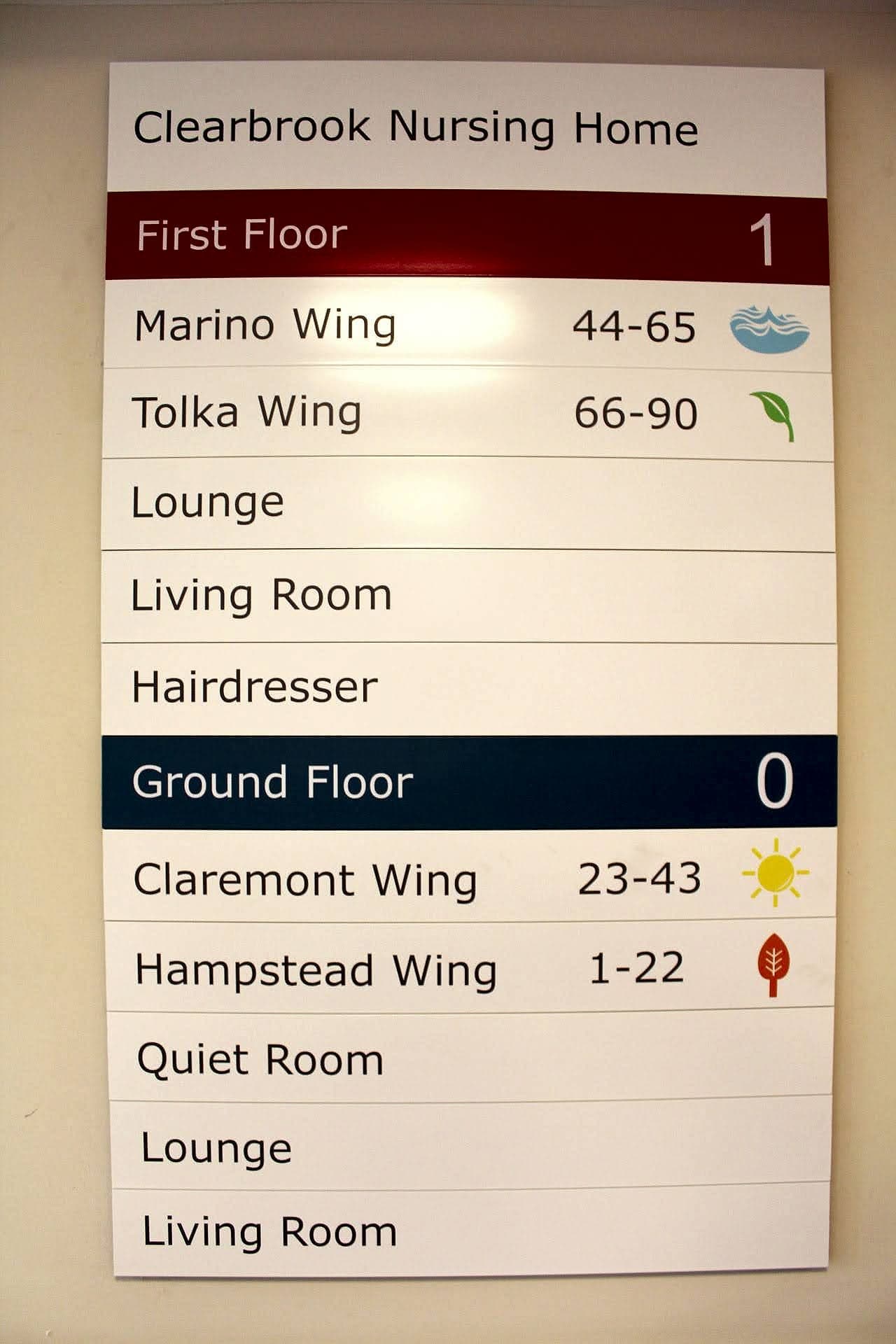
A good convention runs both in parallel and decides which leads where. At Clearbrook Nursing Home the wings carry names, Marino, Tolka, Claremont and Hampstead, each with its own symbol, while the bedrooms within them are numbered in clean ranges. Residents and families navigate by name; staff, deliveries and inspectors navigate by number. Neither system gets in the other's way. Our bias runs against names. Most buildings hand them out far too freely, and every name issued is a fact somebody has to keep true in five separate systems for the life of the building.
The appointment-letter test
Here is the test we apply to any building: take the letter, email or booking confirmation a visitor actually receives, and walk the building following only those words. "Clinic 4, Outpatients" has to appear, in exactly those words, at the entrance directory, at every junction that matters, and on the door. Every point where the wording changes hands is a point where people get lost, and hospitals expose this most brutally: a patient told to attend Clinic 4 will not find Suite 4B, however elegant the signage. Consistency between correspondence and corridor is the single cheapest improvement any building can make.
The test costs nothing and takes an hour. It also settles arguments no meeting can. Whatever name survives the walk from letter to door, word for word, is the name. Everything else is an alias to be retired.
What a good room naming convention decides
Written down, the whole convention fits on a page. It has to settle six things:
- One address per room, for life. Floor plus sequence (2.14 = second floor, fourteenth room), numbered in an order a stranger can infer from the plan, and never renumbered when the room changes use.
- Which rooms get a name. Rooms the public is invited into can carry names; plant rooms, stores and risers never need them. A name is something the convention grants, not a default.
- One vocabulary, held. Meeting Room, Boardroom, Suite, Hub: pick the terms once and stick to them. A building that says "Theatre" on one floor and "Auditorium" on the next is asking visitors to translate.
- The public name. For every destination, the exact wording that appears on letters, the website, the directory and the door, which is to say the wording that passes the appointment-letter test.
- The bilingual position. Where the Official Languages Act applies, Irish and English at equal prominence is a legal requirement, and a naming decision before it is a signage one.
- One source of truth. Room data lives in a single schedule, the seed of the destination schedule, that floor plans, booking systems, correspondence and door signs all read from. The moment naming lives in five spreadsheets, it has already diverged.
Who should decide, and when
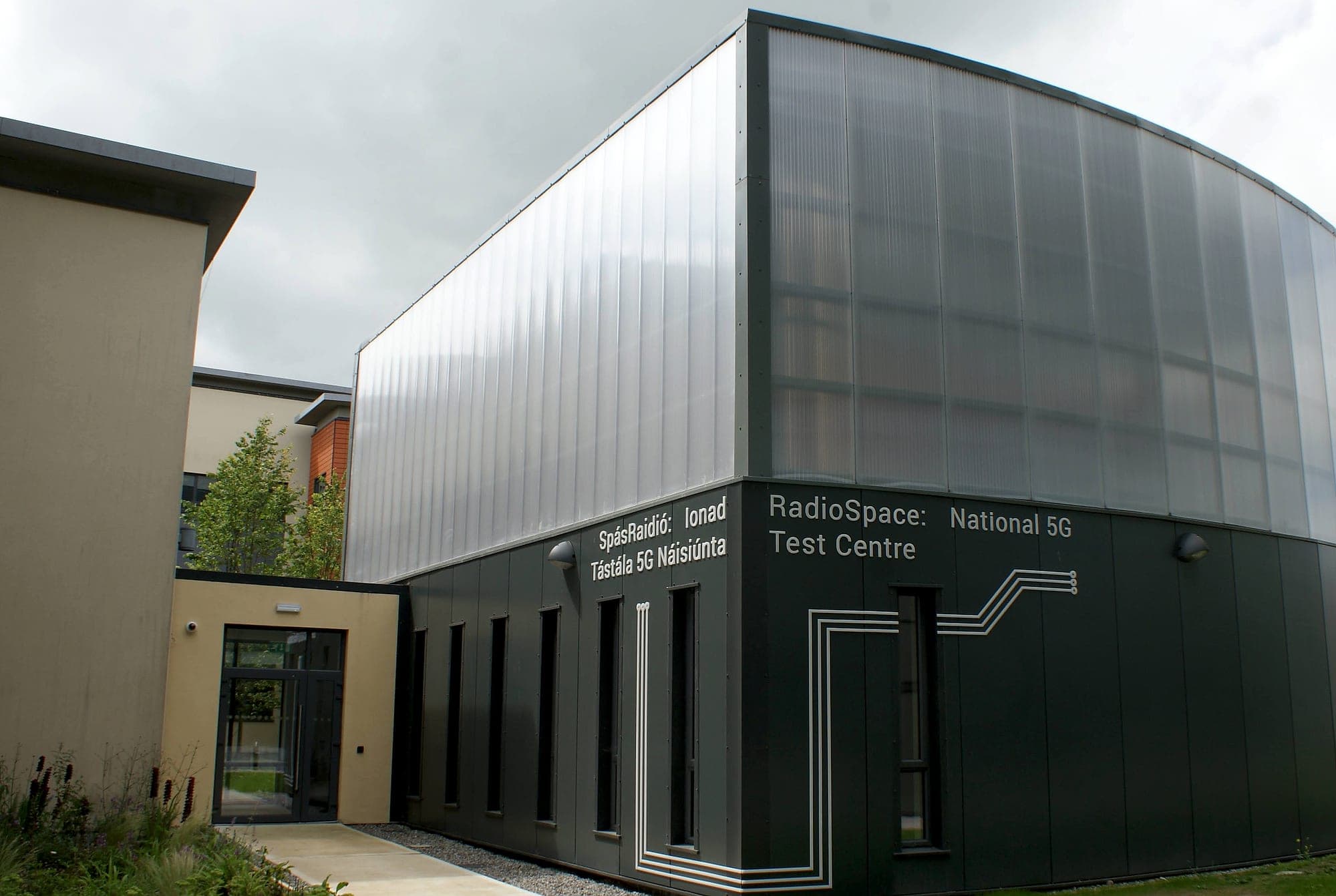
Not the signage contractor at the end, and not a naming committee assembled the week before handover. The convention belongs to the people who will run the building: operations, reception, the team that sends the letters. The design team holds the logic, and where names carry identity the institution's own voice should be in the room. It has to be decided early, at design stage, before door schedules, room data sheets and booking systems harden around whatever the drawings happened to say. Renaming a room on paper costs nothing. Renaming it after fit-out means signage, systems, stationery and habit. Panels still get made carrying names everybody knows are wrong, because the main contractor wants signage on the wall and the naming isn't settled, and that is a bad trade. When we're engaged early this is the first workshop of a wayfinding strategy, because done well, naming outlives every sign we supply. Trinity's Long Room Hub is lettered into the concrete in two languages; the name was worth deciding properly.
If your building already confuses people, start where the confusion started. List what every room is called across letters, systems, plans and doors, and reconcile the aliases before you brief a single sign. That audit is most of the work. If you'd like help running it, or you're naming a building that doesn't exist yet, talk to us while the decisions are still cheap.
Planning a wayfinding project? Talk early, while the big decisions are still cheap.