Skip to content
Wayfinders
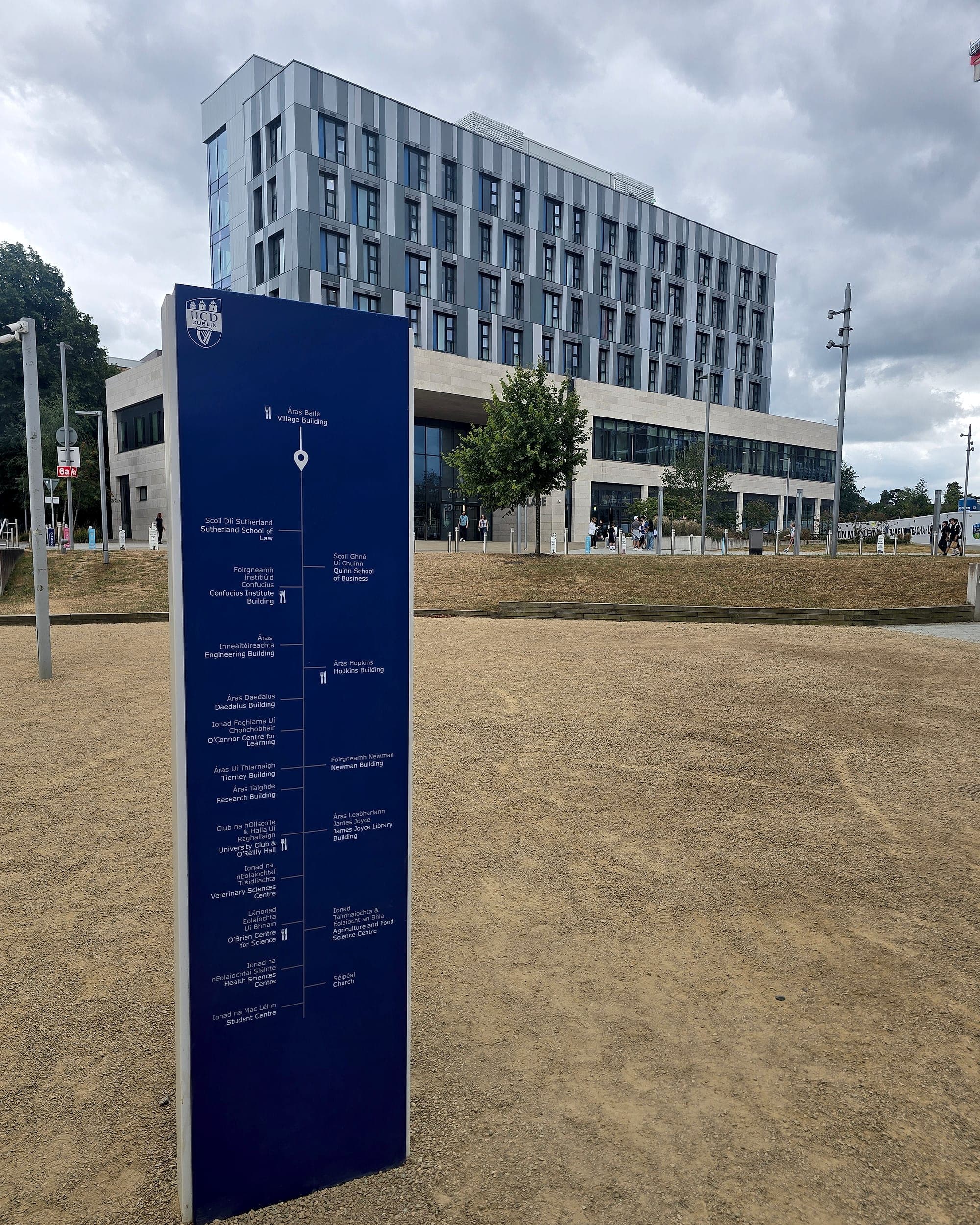
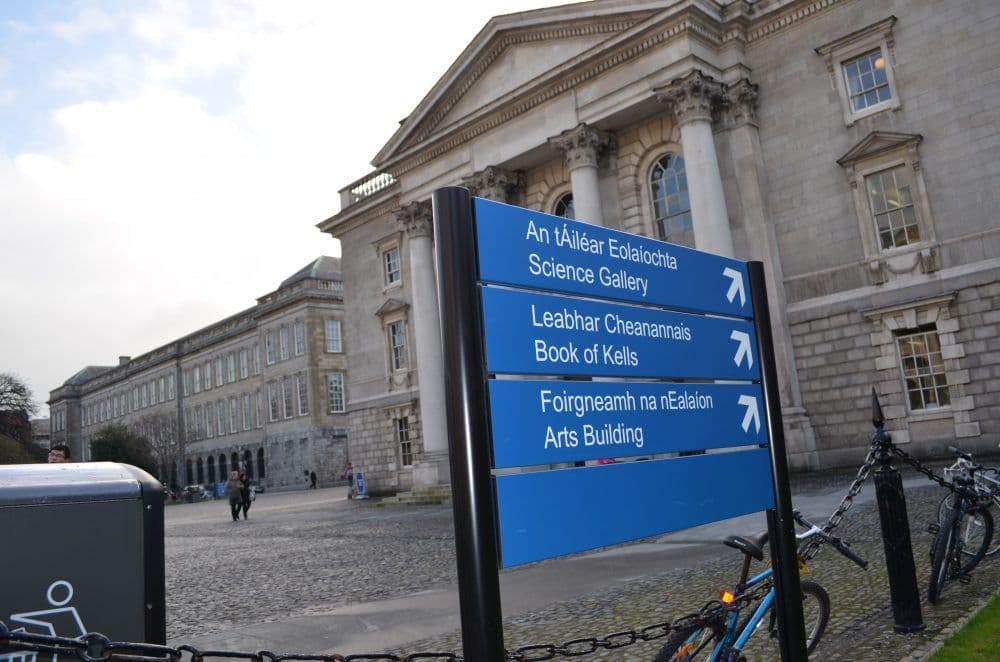
Bilingual Irish and English campus directory totem at University College Dublin, listing buildings either side of a central route line, with a modern academic block behind

Campuses & schools

Campuses people can navigate.

Large campuses, mixed users, heritage environments and evacuation, with one consistent system across many buildings.

In short

Campus wayfinding is one signage system for a whole university or school estate: a single bilingual schedule of building and room names, a sign family that carries from the gate to the door plate, and accessibility built in. Wayfinders has delivered 18+ full campus rollouts in Ireland, and certifies every package on completion.

Universities, institutes and schools, from Trinity, UCD and TU Dublin to Gaelscoileanna, with bilingual signage and Official Languages Act compliance built in.

Designed to complement the architecture and carry across the whole estate.

Full campus rollouts
18+
Client of Trinity College Dublin
~30 years
Design rounds to approval, on average
1.8
Warranty on what we install
10-year

01The challenge

What makes education wayfinding hard

01

A campus built one building at a time

Each new building arrives with its own architect, contractor and signage package. Within a decade the estate speaks in five typefaces, and the student, the visiting lecturer and the parent on open day all lose minutes to it.

02

Two languages, by law

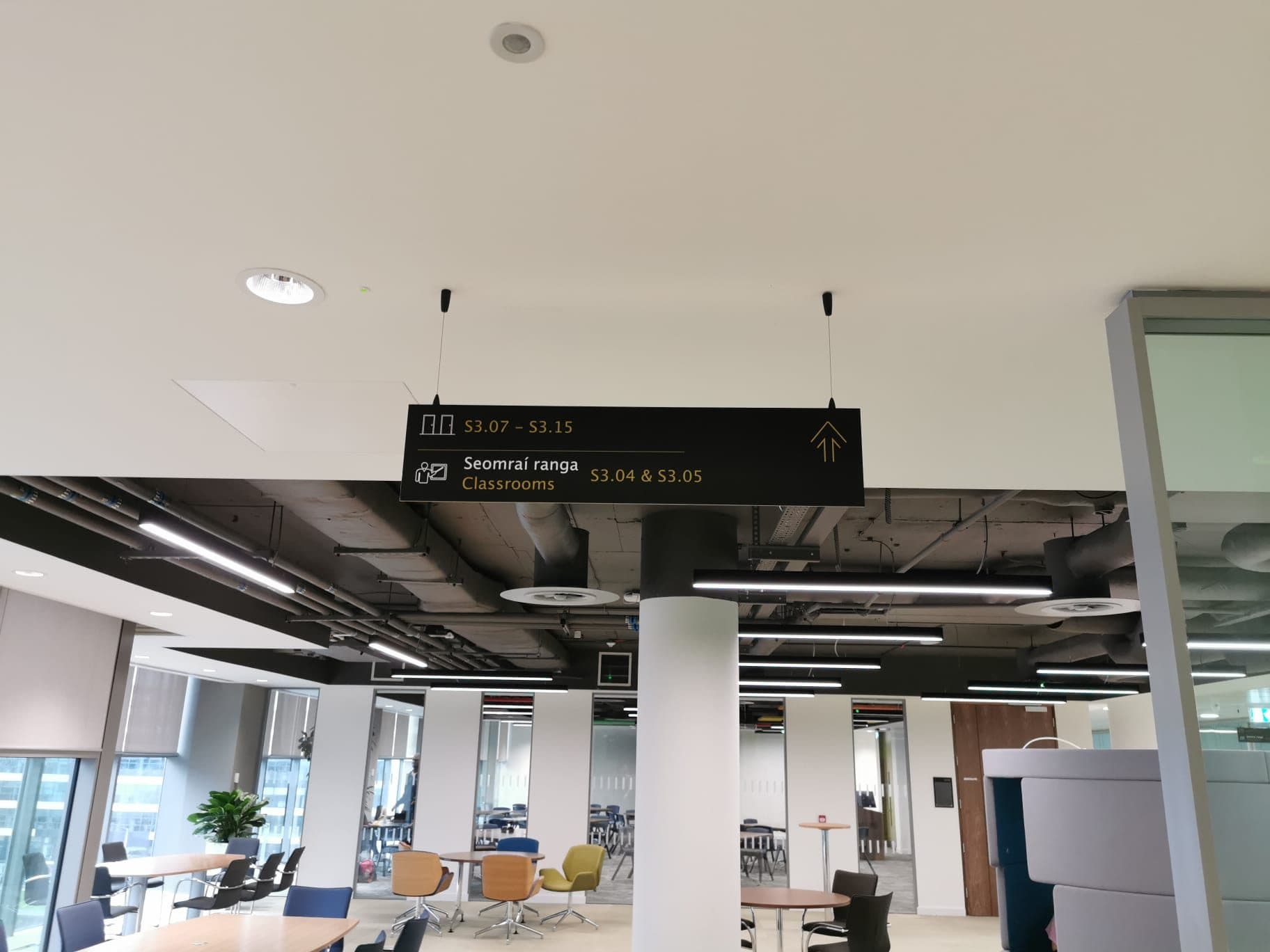
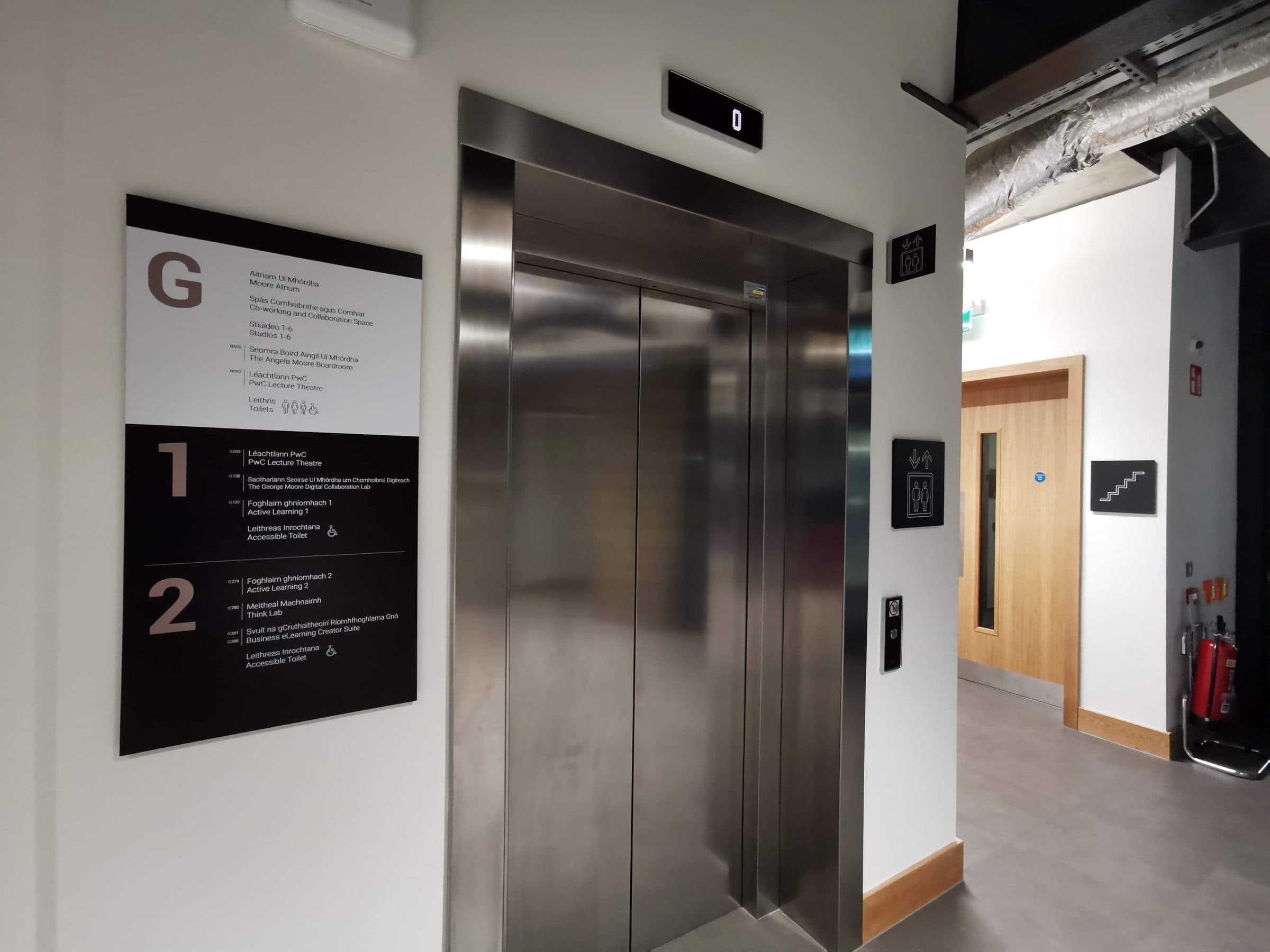
Universities and ETB schools sit inside the Official Languages Act. Irish goes first and is never smaller or less prominent than the English, which doubles the copy on every panel and has to be planned for from the first layout, not squeezed in at artwork stage.

03

Names that change faster than buildings

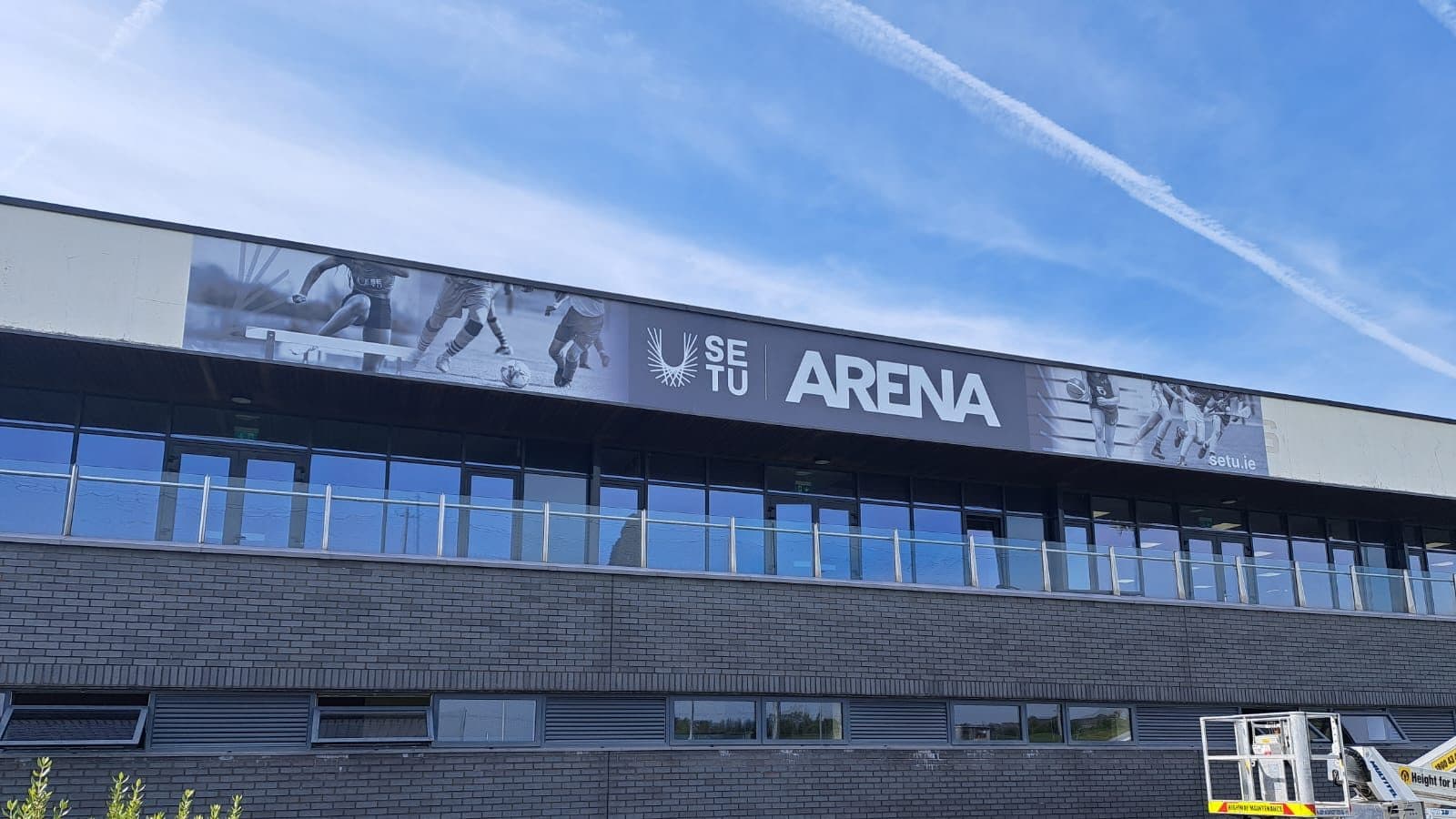
Schools merge, departments move, donors name rooms. SETU had to appear on buildings across three counties after 1 May 2022, with the old institute identities removed first. A system that can't absorb a new name without a new sign family costs you every time.

04

Old fabric and live buildings

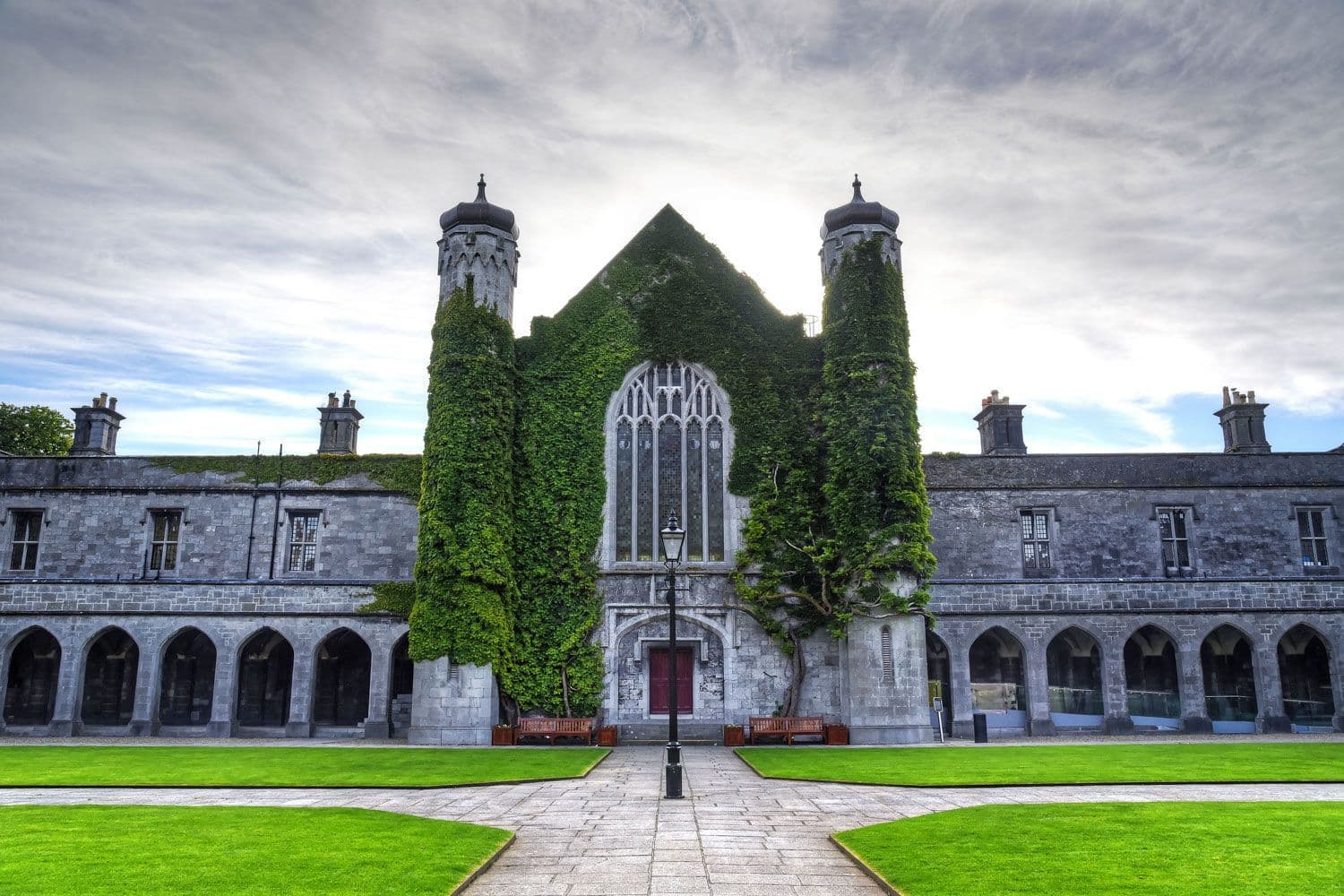
Many campuses carry protected structures, and works to them have to leave the character intact. Installation also has to fit around term dates, exams and buildings that never close.

05

Schools carry a public building's workload

A small school still needs a safeguarding route a stranger can follow from the road to the signing-in hatch, signage that survives children at hand height, and Irish-only signage in a Gaelscoil that a visitor with no Irish can still use.

02What we deliver

One system, designed to installed and certified

Design, project management and installation by our own teams, with one accountable supplier from first drawings to the signed certificate.

  • An estate strategy and one destination schedule

    We survey what is on the walls, then fix zones, building names, room numbering and the bilingual schedule once. At National College of Ireland every room number begins with its floor, so a timetable tells a student which lift button to press.

  • Bilingual and trilingual sign families

    Irish first and at equal weight, panels sized for both languages from the start, and the Irish proofed before anything is made. At the UCD Confucius Institute we set Irish, English and Chinese on one sign face, with braille.

  • Accessible by default

    Part M and BS 8300 as the floor: at least 30 points of LRV difference, mixed-case type, tactile lettering and braille at hand height, and ISO 7010 escape signage designed from the fire drawings.

  • Modern systems in heritage settings

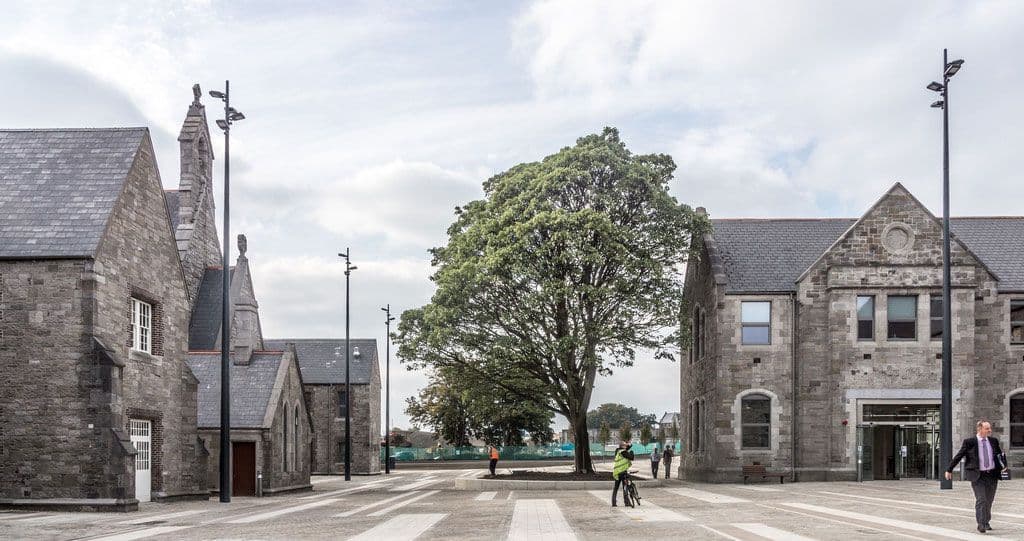
    Signage that sits against cut stone and protected fabric, fixed so it can be moved or removed without damage. At TU Dublin Grangegorman a dark grey system with white text reads cleanly against the grey stone of the older buildings.

  • Made for change

    Modular directories and replaceable inserts. When a department moves or a room is renamed, one blade is remade and the rest stays on the wall, specified from the as-built record rather than a fresh site measure.

  • Design to certified handover, one supplier

    Our own designers, project managers and install teams, scheduled around the academic year. We sign off the compliance certificates ourselves and hand over the as-built schedule, backed by a 10-year warranty.

03How we work

Design to certification, with one supplier

Approvals cut from months to days. The same five stages on every project, so nothing falls between packages.

  1. 01

    Design

    A wayfinding system and sign family designed to work with your architecture and identity.

  2. 02

    Wayfinding

    Numbering, floor IDs, lift lobbies, car parks and egress, built for how people navigate.

  3. 03

    Compliance

    Designed to the strictest accessibility and legislative criteria. Certified on completion.

  4. 04

    Manufacture

    Stove-enamelled aluminium and other long-life materials, made to spec or above it.

  5. 05

    Installation

    Our own fitting teams, working to complex construction schedules.

How we work, stage by stage →

04Standards

Compliant by default

The standards and regulations this work is designed to. Compliance is the baseline, not an upsell.

Official Languages Act 2003 (as amended 2021) and S.I. No. 391 of 2008
Irish text first, never smaller, less prominent or less legible than the English. Applies to universities and other listed public bodies, and in practice sets the norm for most Irish schools.
Building Regulations Part M and TGD M
Access and use: legible, clear wording, the International Symbol of Access on accessible routes and entrances, tactile information on key rooms.
BS 8300
The detail behind Part M: a minimum 30-point LRV difference between text and background, matt finishes, and tactile signs mounted in the 1.4 to 1.7 metre band.
TGD B and ISO 7010
Fire safety and escape signage designed from the fire certificate, using standard safety symbols that read the same to every visitor and international student.
Children First Act 2015
Every school holds a Child Safeguarding Statement. The entrance signage is where the visitor procedure that supports it is either followed or ignored.
Planning and Development Act 2000, Part IV
Signage on a protected structure must not materially affect its character. A section 57 declaration settles what is exempt, and takes up to twelve weeks, so it belongs at concept stage.
Campus and School Wayfinding

Brochure · 8 pages

Campuses people can navigate.

Wayfinding for universities, institutes and schools: one bilingual, accessible system across the whole estate, designed, made, installed and certified by one specialist.

06FAQs

Common questions

Something else? Ask us directly.

What is campus wayfinding?

Campus wayfinding is the system that gets a person from the campus gate to the right room without asking anyone. It covers the strategy and naming, the totems and building identification outside, directories and directional signs inside, and the door plate at the end of the journey, all from one schedule of names.

Does university signage have to be bilingual?

Yes, for universities and other public bodies listed under the Official Languages Act. The signage regulations, S.I. No. 391 of 2008, require the Irish to come first and to be no smaller, less prominent or less legible than the English. We size every panel for both languages from the first layout and have the Irish proofed before manufacture.

How do you keep a campus consistent as new buildings are added?

By signing the estate rather than the building. A destination schedule and a sign family are fixed once, and each new building joins a system that already exists. That is how Trinity College Dublin, a client of almost 30 years, has kept its signage growing with the university rather than against it.

Can you work on listed or protected buildings?

Yes. Many Irish campuses include protected structures, and we design and fix signage so it can be removed later without damaging the fabric, typically into mortar joints or with freestanding elements rather than into the face of the stone. Where needed, we recommend a section 57 declaration early, because it can take twelve weeks.

Do you install during term time?

Yes. Our own install teams work around timetables, exams and buildings that stay open, and we phase the work so lecture theatres, libraries and entrances are never left half-signed. Large changes are usually planned for the summer works window.

Do you do school signage as well as universities?

Yes. We have signed national schools, Gaelscoileanna and post-primary campuses, including Scoil Assaim in Raheny and Gaelscoil Bhaile Munna. The priorities are a safeguarding route from road to reception, signs robust enough for child height, and Irish-only signage in a Gaelscoil backed by pictograms a visitor without Irish can follow.

How long does a campus wayfinding project take?

It depends on the estate, but approval is rarely the bottleneck. Our packages average 1.8 design rounds, and because your estates team, the architect and our designers review the same live schedule, approvals that used to take months come back in days.

Who certifies that the signage is compliant?

We do. We sign off the compliance certificates on completion and hand over the as-built schedule, so the estates office has a record of every sign, where it is and what it says. The installation is covered by our 10-year warranty.

07Insights

Further reading

All insights →
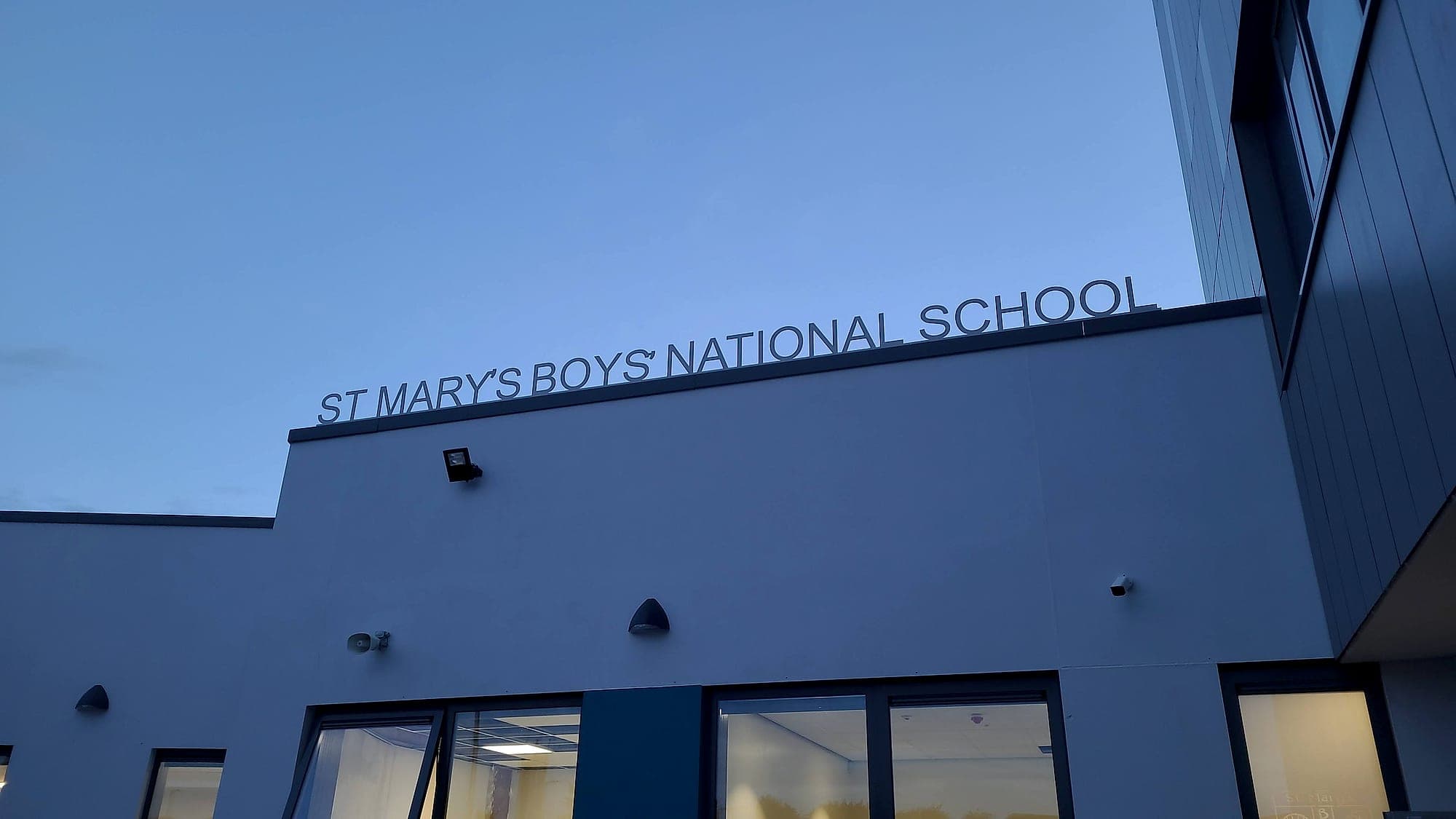
School signage in Ireland: built-up lettering reading St Mary's Boys' National School along the parapet of the new school building at Ennistymon Education Campus at dusk
Wayfinding by Environment · 7 min read

School signage in Ireland: primary and secondary, done properly

A school is a public building, a workplace and a child's daily landmark all at once. What its signage has to do, and the standards it has to meet.

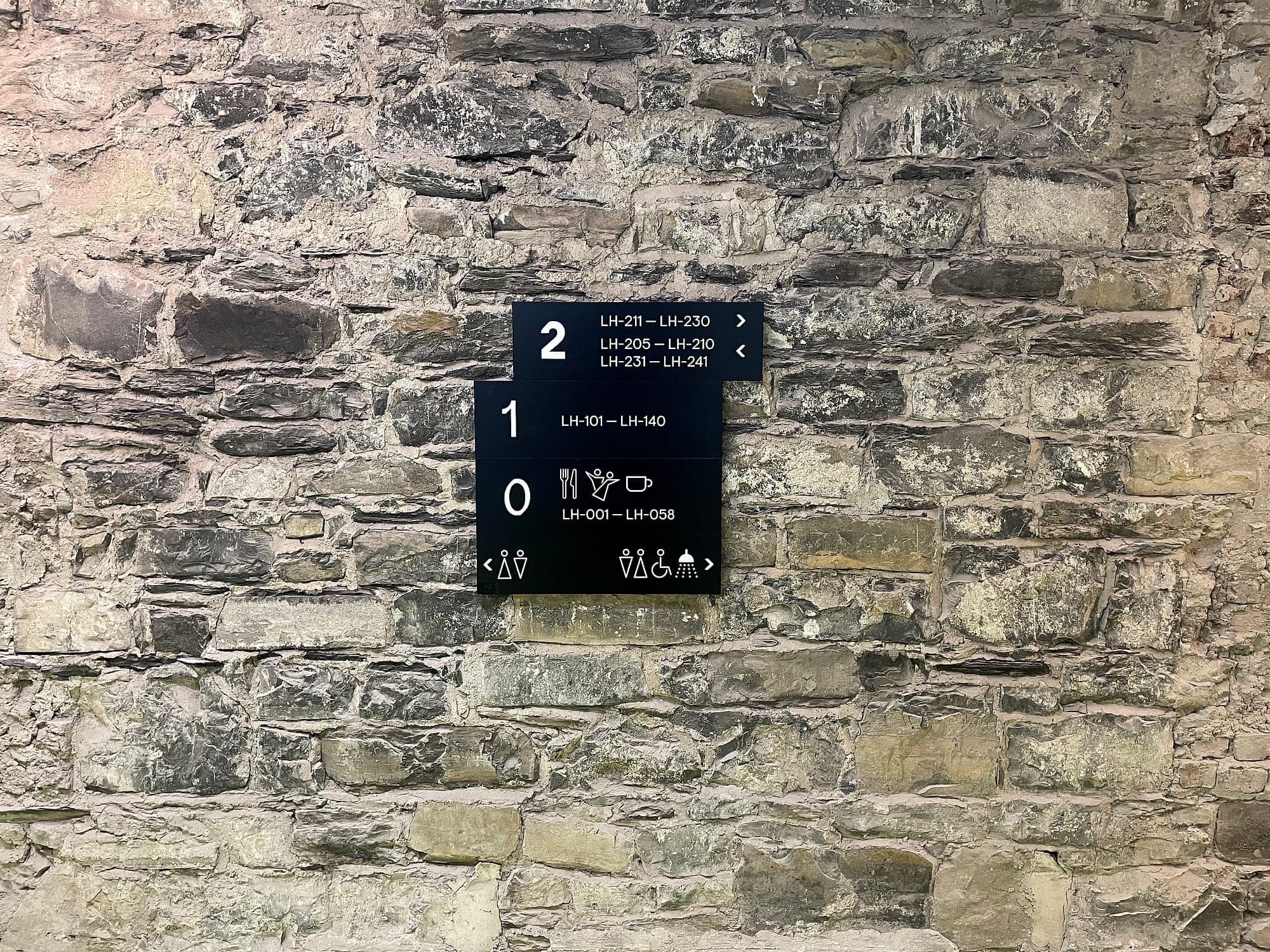
Listed building signage: a compact stepped floor directory in dark grey and white fixed to a rubble limestone wall in a historic building
Compliance & the Law · 6 min read

Listed building signage: working with heritage and protected structures

Drill in the wrong place and you have altered a protected structure. How signage gets consented, fixed and made good in a heritage building.

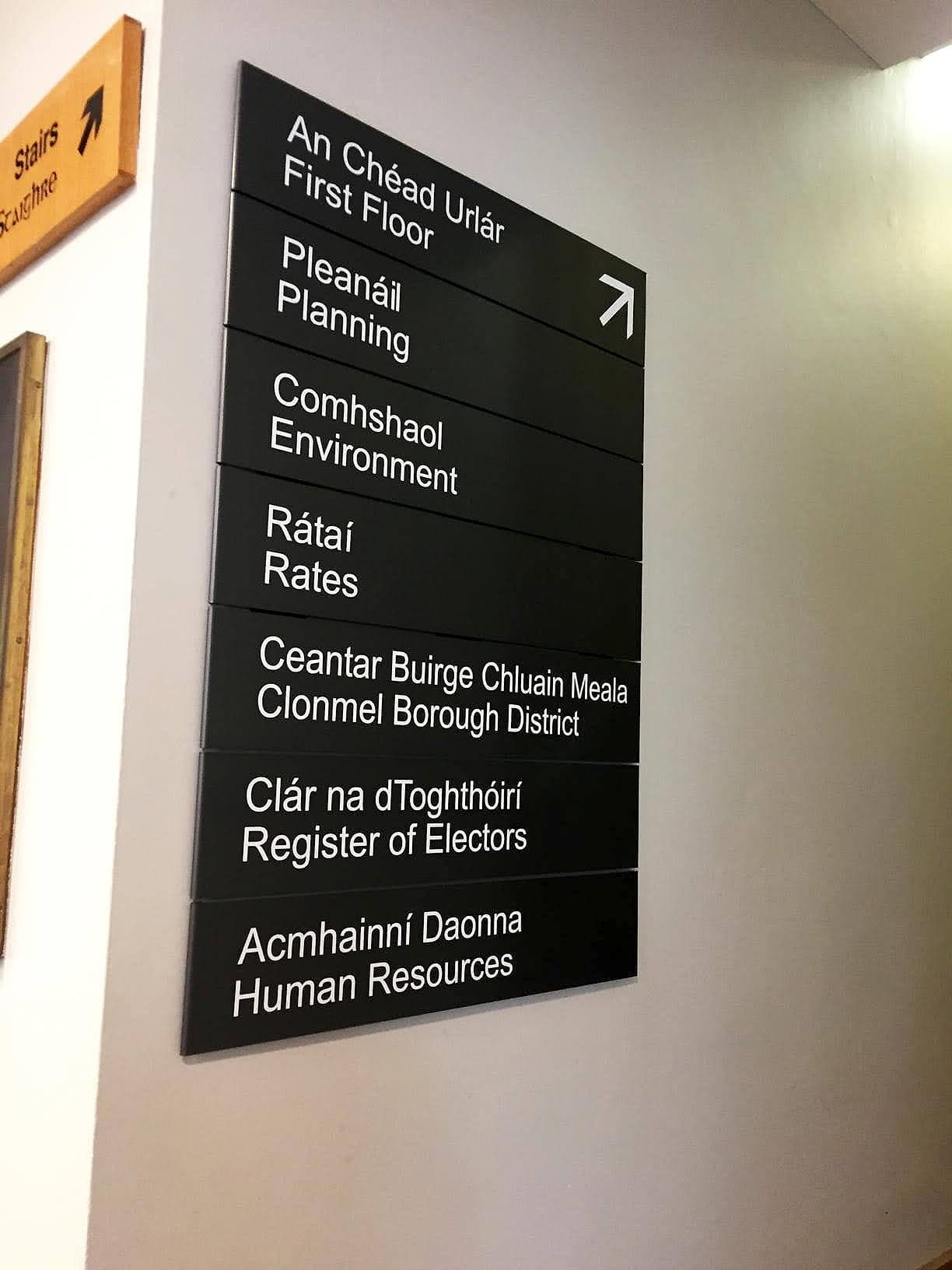
Bilingual Irish and English modular directory sign at Tipperary County Council offices, listing first-floor departments from Planning to Human Resources
The Craft of Wayfinding · 6 min read

The destination schedule: the document every wayfinding project lives or dies by

Before a single sign is drawn, one unglamorous spreadsheet decides whether a building will make sense. Most projects skip it. Here's what that costs.

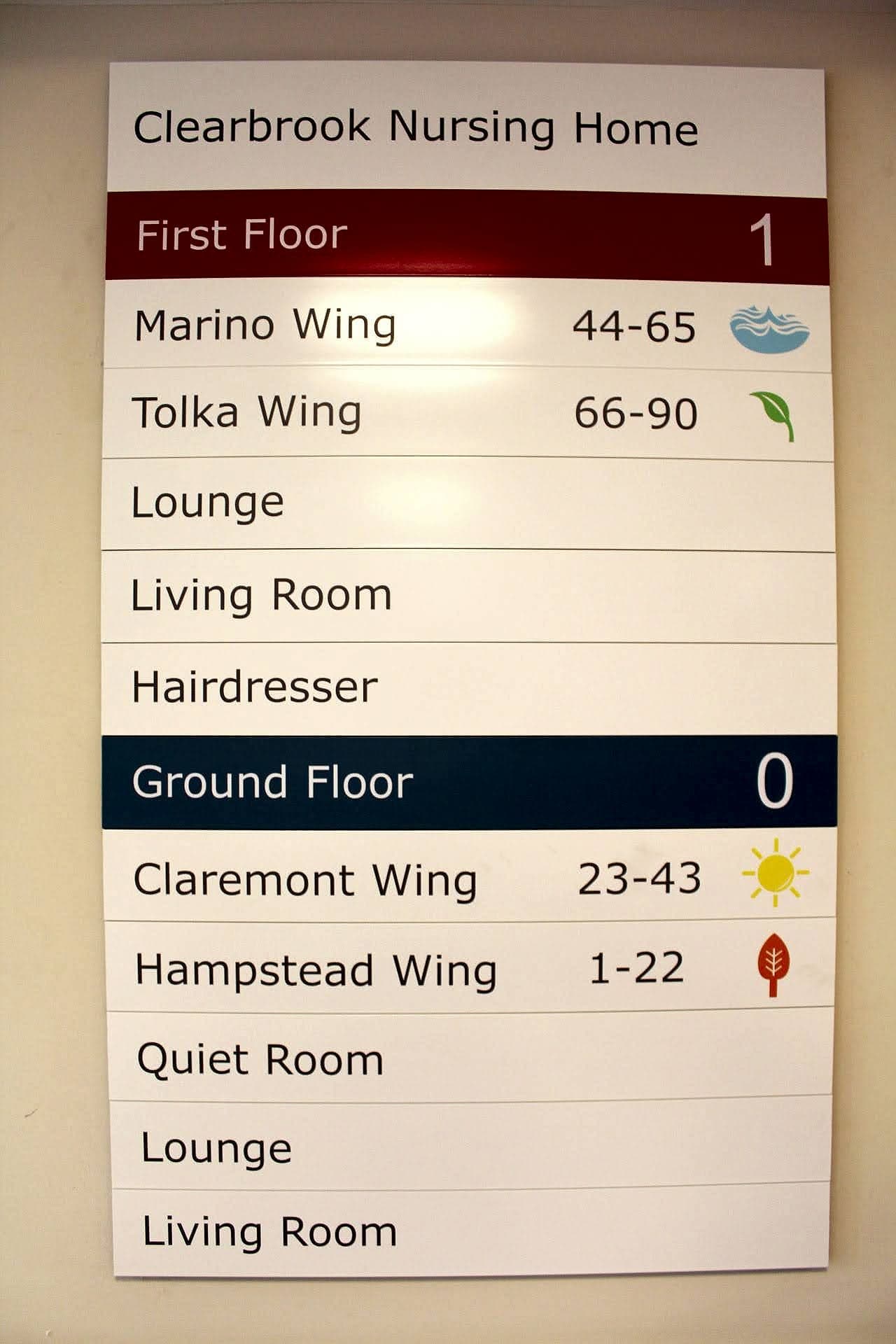
Building directory at Clearbrook Nursing Home listing named wings (Marino, Tolka, Claremont and Hampstead) with room number ranges and landmark symbols for each floor
The Craft of Wayfinding · 5 min read

Before the signs: why a room naming convention decides whether a building makes sense

One room, three names, and a building nobody can follow. What a good room naming convention decides, who should own it, and why it comes before the signs.

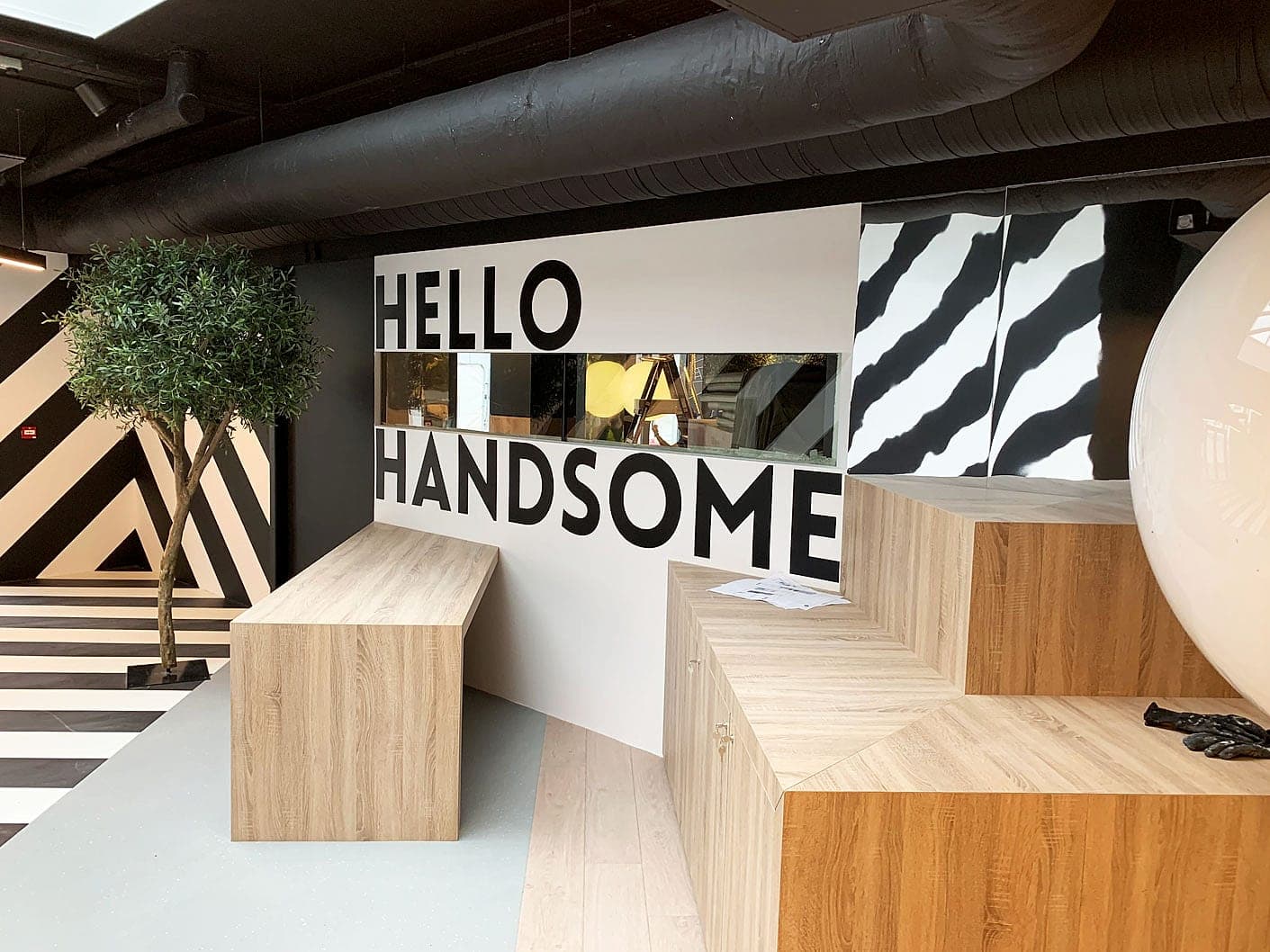
Student accommodation signage at Hatch: oversized HELLO HANDSOME wall lettering above the reception bench, with black and white chevron floor and wall graphics
Wayfinding by Environment · 5 min read

Student accommodation signage: branded living, clear navigation

Purpose-built student housing empties and refills every September, and takes a decade of ordinary wear in about three years. What the signage has to survive.

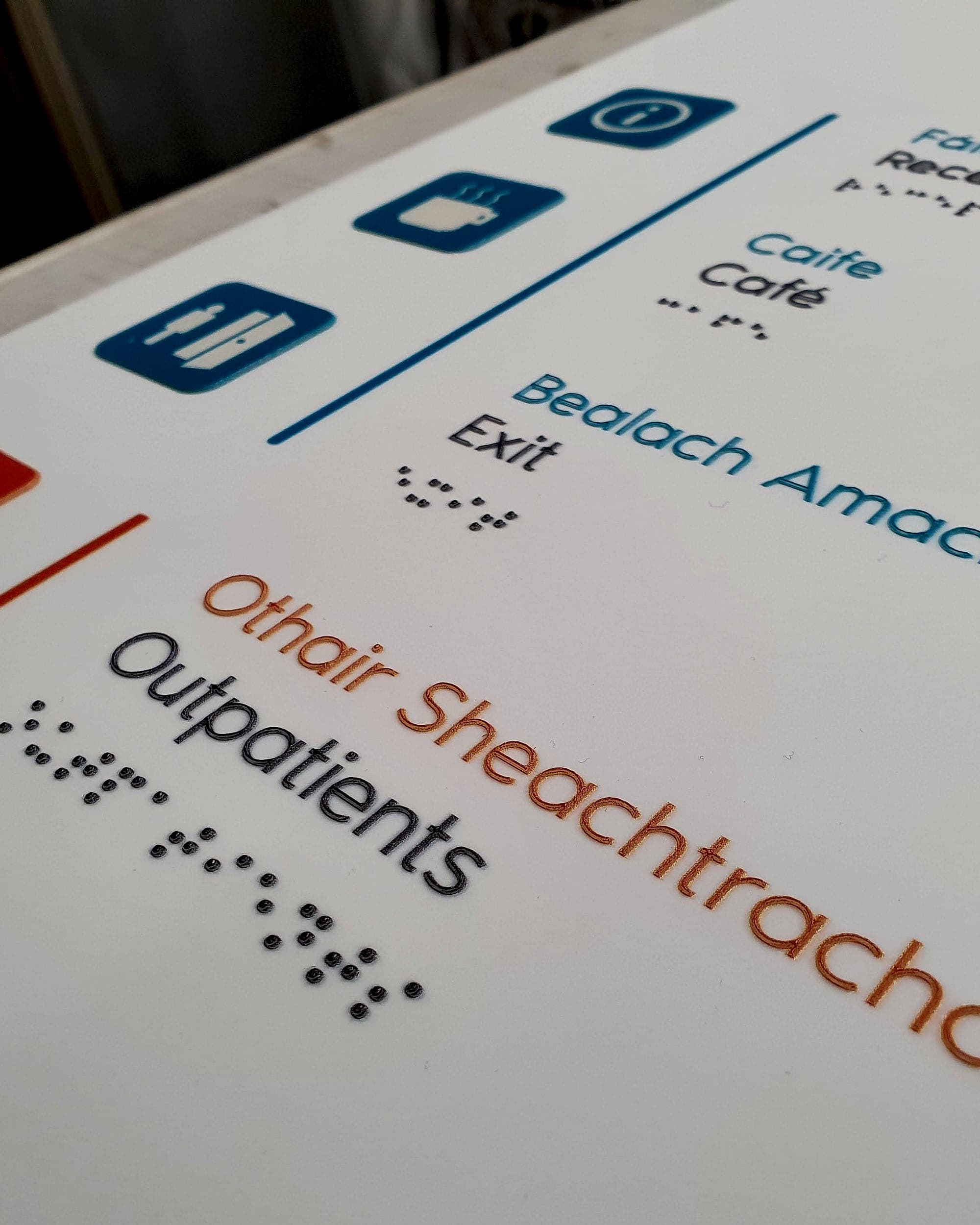
The Rotunda Hospital (BS 8300 compliant signage detail): bilingual tactile wayfinding panel with raised mixed-case lettering, tactile pictograms and braille beneath each line
Accessible by Design · 6 min read

BS 8300 explained: the standard behind accessible signage

The British Standard behind accessible signage: what BS 8300 covers, how it pairs with Part M, and the clauses that decide whether a sign works.

Campuses & schools

Talk to a specialist about your education programme.

Approvals cut from months to days, typically around 20% off the wayfinding package, and one supplier from design to installation.