
Signage maintenance: thinking in decades, not defects
Signage rarely breaks. It fades, dulls, goes out of date and stops being believed. Lifespans, cleaning regimes, warranties and spares: the long view.
Signage maintenance is the planned upkeep of an installed wayfinding system: cleaning, inspection, re-lamping, panel replacement, content updates. The point is a system that stays legible, accurate and compliant for the whole life of the building. Done properly it's a schedule and a spares stock, agreed at handover. Done badly it's a phone call after something has already gone wrong.
It gets neglected because signage almost never fails dramatically. Nothing snaps, and the panels are all still there. What happens is slower. A coating chalks. A print loses its blacks. A department is renamed and somebody tapes an A4 page over the door sign. None of it gets logged as a fault, and yet within a decade the system has stopped being trusted, which for wayfinding is the same as being broken.
We design, supply and install, and we warrant what we supply for ten years, so we go back. A decade of returning to your own work is a blunt education. Some specifications age well and some do not, and the signs say so before anyone else does.
What actually wears out, and roughly when
A sign isn't one lifespan; it's a stack of them. The substrate outlives the graphic, the graphic outlives the illumination, and the information outlives none of them. Planning means knowing which layer expires first:
- Powder-coated aluminium outdoors: fifteen to twenty-five years before the finish is the problem. Considerably less on saturated reds and oranges, which are the least stable pigments in daylight.
- Digital print with a UV-stable overlaminate: five to seven years outdoors, about what the film manufacturers warrant. The laminate is sacrificial, and far cheaper to renew than the panel under it.
- Cut cast vinyl in a colour-through film: seven to ten years, because there's no ink to fade; the colour runs all the way through.
- Stainless and brass: decades. Grade 316 for coastal work, 304 inland only. Both patinate; neither really fails, and coastal 304 will tea-stain long before it corrodes.
- Timber and painted joinery: two to five years between recoats. It's the one external material that needs a diary entry.
- LED illumination: modules are rated in tens of thousands of hours, but the driver is what fails, typically between five and ten years. Budget for a re-lamp, not a new sign.
- The information itself: eighteen months to three years in a hospital or a college. Nothing else on this list expires as fast as the words.
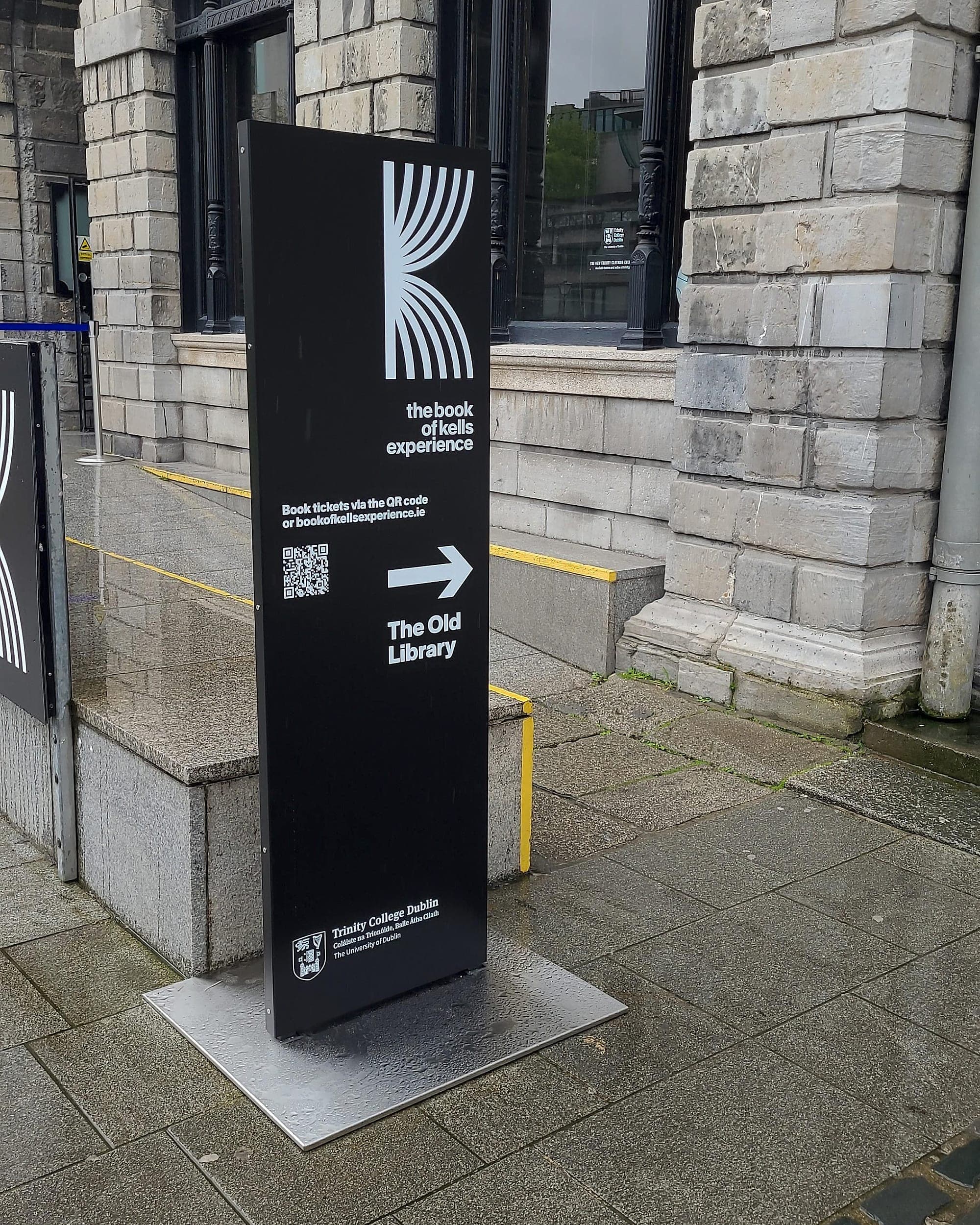
Most of what looks like fading is dirt
The most cost-effective act of signage maintenance is washing. Diesel film on a car park totem, algae on a north-facing panel, hand cream on a lift-lobby directory: none of it is damage, all of it reads as neglect, and it arrives so gradually that nobody notices the day the sign stopped looking new. Twice a year outdoors, quarterly on high-touch internal signage, and you have held the line.
- Warm water, mild detergent, soft cloth, rinse. That is the whole specification for ninety per cent of signage.
- No solvents, no abrasive pads, no pressure washers. Solvent lifts vinyl edges and hazes acrylic; a pressure washer drives water past a seal.
- Anti-graffiti coatings need their own product, because the wrong solvent removes the sacrificial layer along with the tag.
- Photoluminescent signs are cleaned for a different reason: their charge depends on light reaching the face, so a dusty photoluminescent sign is a dim one.
Most of what looks like fading is dirt, and dirt is cheap.
Legibility is a legal duty, not an aesthetic one
For statutory signage, upkeep isn't discretionary. Ireland's Safety, Health and Welfare at Work (General Application) Regulations 2007 require safety signs to be cleaned, maintained, checked and where necessary replaced on a regular basis. A sign faded or obscured past reading isn't compliant just because it's still on the wall. Escape signage carries the same burden under TGD B, and in England the Fire Safety (England) Regulations 2022 place a standing duty on the responsible person for a high-rise residential building to keep floor and flat identification visible in low light. That duty doesn't expire the day the signs go up.
Accessibility behaves the same way. BS 8300's thirty-point recommendation for light reflectance value describes the sign on the wall today, not the sign on the drawing. A system certified compliant at handover can drift below the threshold as the white greys and the legend chalks, without anybody having changed a thing. Contrast has to be maintained like anything else in a building.
What a ten-year warranty is actually for
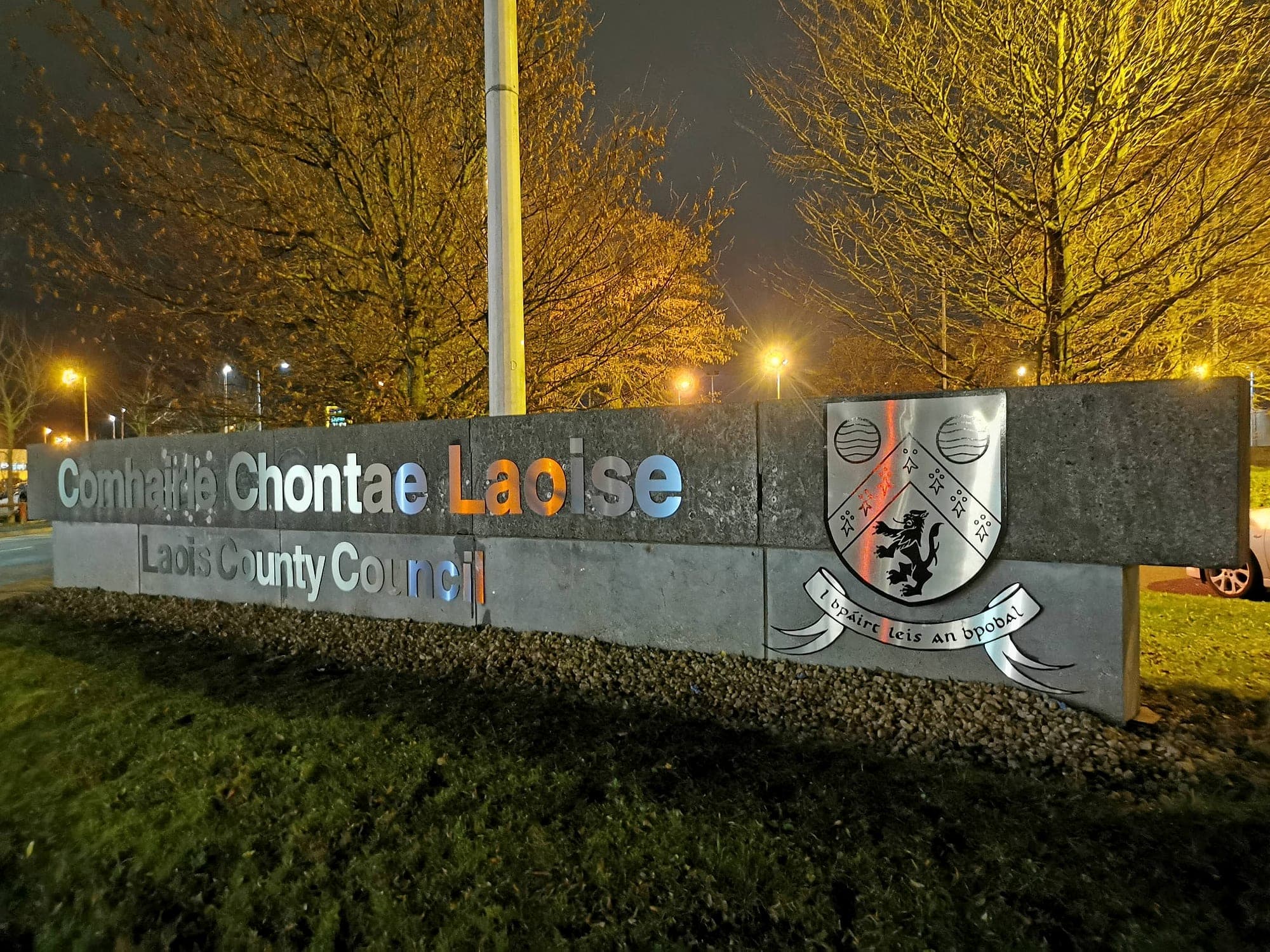
The value in a ten-year warranty is less about free replacements than about who carries the risk of a specification decision. A supplier who hands over at the factory gate has no exposure to the fastener that was a grade too low, or the finish one class short of the conditions it will actually see. A team who designed, made, installed and warranted the same sign has every reason to get all three right first time. Mostly the warranty is a discipline we impose on ourselves.
- 10 yr
- warranty on signage we design, supply and install
- 5–7 yr
- typical outdoor life of a printed graphic, against 15–25 for the powder-coated panel behind it
- ~20%
- less than fragmented procurement, with one supplier from design to installation
Spares: the decision that ages best
The most useful thing anyone can do on the day a system is finished costs almost nothing: order a small over-run from the original batch and put it in a cupboard. Powder coat and print colour drift between production runs, so a panel made three years later is a near-match, and a near-match is its own kind of damage. Keep the schedule with it, covering coating references, ink and film profiles, panel sizes, fixing types, and the typeface and its licence. That document does more than the spare panel to stop a repair turning into a redesign, and it's where a materials specification pays for itself.

What to ask for in a signage maintenance agreement
An agreement is worth having where a building has scale, statutory exposure or public frontage: campuses, hospitals, council estates, managed residential schemes. What makes it worth having is specificity:
- A scheduled condition survey that photographs every external sign and reports on finish, fixings, alignment and legibility. A survey that only logs breakages will come back clean every year until the day the system is unusable.
- A named response time for statutory signage, which is a different service level from a faded car park panel.
- Content updates priced in advance, so changing one door sign does not need a quotation each time.
- A held spares stock, with the batch references recorded against it.
- Access arranged in the contract. Platform hire, traffic management and out-of-hours working are usually the largest line in an external repair.
None of this is complicated. It's the ordinary discipline of owning a small piece of building fabric. Wash it, look at it once a year, keep the spares, write down what it's made of. And settle durability at design stage, because a warranty only pays for the sign, never for the platform hire and the traffic management around it.
The decisions that make a sign last are all taken before it is made.
Inheriting a signage system that has drifted, or specifying one you'll still be answerable for in 2040? See how we handle maintenance and lifecycle and our public-sector work, or talk to us about a condition survey.
Planning a wayfinding project? Talk early, while the big decisions are still cheap.